Monday, May 16, 2011

COTD#1

I have only been to a couple of cemeteries in my lifetime. This first picture of me when I went to visit St Paul’s cemetery in lower Manhattan. There were a surprising number of people there. Not only because they were doing this project but plenty of tourists, a bunch of people walking around, taking pictures. Looking at the cemetery from afar it seemed less than well maintained. My initials inferences were the water pipes weaving between tombs stones, broken and fallen stones, and the patches of grass that covered the area randomly. Then attempted to read the stones, but I found that most of them were so faded that it was unrecognizable. I discovered a grave that was to a man who man George Washington’s battle sword. I reconsidered my thoughts about the cemetery. As I walked through it the more beautiful it got. It was a peaceful place in the middle of a chaotic and busy area. It is amazing that the cemetery has survived since 1766 and through the 9/11 attacks. Then I thought again about all its imperfections, which then I realize just symbolizes its age. All the cracks, the worn signs, give the cemetery its unique character. The same way a person experiences aging was what I saw in the cemetery. Are cemeteries more about the dead or the living?

The Second cemetery I went to visit was in Rutland Vermont. Stones went on in every direction in no particular pattern. The graves began to disappear the further you got into the forest surrounding it. The weather consisted of only rain. I showed up at the cemetery and thought I was the only one there. Honestly I was a little scared, I’ m not sure hwy exactly. It might have something to do with the way cemeteries are portrayed in all the scary movies I have seen. Yeah ok zombie aren’t real I get it. I don’t know what I was afraid of. While I walked around I noticed I was alone (no not a zombie) there was a man digging a grave. I was relived to see someone else there and so I wasn’t afraid to approach him. I went over and said hello to him. He was a little who had been digging graves for about 15 years, on top of working other jobs. He has buried to many people to count and most of whom he has known. The man was right when he said that cemeteries are scary because “Your voice is the only one you can hear”

Project: The Right way to Death

I.
"I have already prepaid a program with the **Neptune Society to be cremated." My grandma is sure that this is the right method for her. This plan of action has been in place for about 8 years now. This was a decision that was made as a result of her brothers death. That experience was so emotionally challenging that my grandma did not want anyone in our family going through it when she died. Thats where her preplan death package came into place, "They take care of everything , no matter where I am in the US or world when I die. This is easy on my family and does not require funds being taken out of my estate for a burial. "

My grandma's beliefs reflect those of her mentor Sylvia Browne. This american author is a well known women in the subject of spirituality. Her books explore topics of the afterlife and guidance to one souls. These are the ideas that are instilled in my grandma and are the base of her religious practices. Sylvia Browne has played a role in influencing my grandma decision about the process of cremation, "I believe our soul/consciousness survives beyond death and does not require a body for any kind of supposed
resurrection." The other reason supporting the cremation process was because "cremated is more based on practicality."

With the plan of cremation and a spiritual ideology my grandma chose to trust the Neptune Society. Looking through the information provided by Neptune Society my grandmas views are well represented through their mission statement: From growing your retirement nest egg to funding your children's or grandchildren's education, you know from experience that peace of mind often begins with a vision of what you want and the thoughtful planning that makes it reality.

**http://www.neptunesociety.com/cremation-pre-planning?gclid=CPiHxfr47agCFUSo4Aod0xQdDA

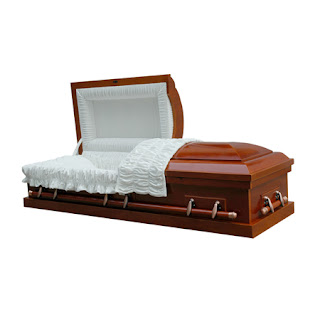
II. Now if your like my other grandma than a "full embalming and open caskets burial" is preferred. This ideology comes from a raised and full practicing Catholic. My grandmas beliefs originate from her studies of the bible. Her opinions on death illustrate a more traditional burial type, one that includes a open casket and embalming. This funeral plan was decided by my grandma, her reasoning she said was because "I want my loved ones to remember me in a beautiful and peaceful state."


A very tradition christian burial was one in the consecrated ground. It was only until recently that christians began to cremate their dead. Although a more common process than past years cremation is still forbidden in some areas such as the eastern orthodox churches. On a personal level my grandma would never agree to the cremation process. This might be an outcome of her generation and practices of more traditional
practices.

III.
Considering a person from a younger generation is my mother. She perpectives on the care of death take another extreme form. My mother 's preferred practice is close to the exact opposite of a traditional funeral. She fully supports the cremation of her body, with no memorial, with no ceremony. These beliefs are not ones that are influenced by any religious practices, instead they are ones that are simply results of experience. My mother's ideology took its form throughout each funeral, memorial service she attended. Through these experiences she was able to conclude that "creation is practical." Ideally she wants to be cremated and then spread around in her favorite places. Being scattered around will remind loved ones the memories that were made in those places.

Although these ideologies are three different extreme points of views they have surprising underlying similarities. Firstly, all the interviews spoke very strongly about their beliefs. While discussing with them there was no contradictions, alternatives, unanswered questions they all spoke as thought they were right. Who is say they are not?

Another similarity between all of these practices is how the quality of convince is incorporated into the plan. My grandmas point of views and my mothers are reflect a plan that is beneficial to the loved ones who are left behind. The spiritual grandma attempts to ease her loved ones mourning process by making all her funeral arguments ahead of time. My catholic grandmother choices to be embalmed and have an open caskets so she can be viewed and remembered in a beautiful way. Lastly, my mother, who requested a simply cremation along with the positive remembrance of memories without a any type of cremation. IS the care of death about the dead or about the living?

Friday, May 13, 2011

Research II


Before we began our trek through the pages of the bible, we prayed. Individually we prayed, I was advised to pray as if it were a conversation between me and God. in stillness and complete silence I thought about what some of the things were I should say to God.


This was me in the religious class I attended this week. The focus was to have a basic understanding through the bible. It reminded in alot of the three and only three Sunday’s schools classes i attended as a little girl. It was a class of three: two returning students and me. I decided to attend after running into an old friend, who happened to be one of the returning students. Our random "bump in" seemed to be a part of her philosophy that "everything happens for a reason." I was surprised by both her transformation into this religious field and by myself accepting her religious class invitation. Although a little uncomfortable I forced myself to be open minded, for the sake of being respectful to other peoples beliefs, for the sake of this piece, for general insight.


The teacher? The instructor? The guide seems like more of an appropriate term, started our discussion with the basic of where we came from. In the bible reads "The LORD God formed the man from the dust of the ground and breathed into his nostrils the breath of life, and the man became a living being." This section tells us that man is created with the tangible aspect of dust, which translates to the tangible aspect of us: our body. The other part of man is the part that is not visible to the naked eye and that is breath, translated into a person’s spirit. Throughout the bible there are constant decisions of body and sprit. The two are treated as two parts. Because in this religion the belief is that the sprit is what lives on pass the time that the body does. This is where the bible mentions the eternal life. Which is a life with no time boundaries. Different sections of the bible suggest people born before the earth. The fact is that the earth was created 4 billion years ago; the bible suggests that it’s the spirit that lives on in heaven.


Heaven is described in the bible as such a paradise. It is "The Kingdom of Heaven" a place of "delight always" and rejoices. With such a paradise I the after life people with these beliefs seem to have a motivation to do well on earth. What does that mean though? I looked for the simply answers in this class. Basically the story of our existence is told that we all, meaning our spirits started in heaven. Humans were sent to earth after committing the violence act of greed, selfishness in heaven. People sinned in trying to overrule god and therefore were sent to earth. It is interpreted form the bible that Sinning equals death. This gives insight as to why people who practice these beliefs find the need to make their sins forgiven.


It is these beliefs that circulate in my family. I was raised very causally with these beliefs never truly understanding it. My grandmother, who made all her children attend Sunday schools, insisted that my mother do the same with me. So as a child I attended approximately three Sunday schools classes. I simply wasn’t interested as a child and simply unwilling as a teen.


I traced back these strong practicing beliefs in my family to my grandmother. She always has been so entwined with these practices. So much that after making first communion and confirmation she continued on in hopes of becoming a nun. She decided against it after meeting the man who is now my grandpa. The story thickens years later when they divorce. A forced decision and a sin in the bible my grandma further developed herself in the church.

Sunday, May 8, 2011

Independant Research A

GRAY, HELEN T. . "How different religions bury their dead." Kansas City Star May. 06, 2011: n. pag. Web. 8 May 2011. .

The one commonality between how all religions bury their dead is the respect of the body. Some religions using more natural ways of burials: no embalming, no caskets. While others have no burials, but will have memorials.

http://www.chicagotribune.com/news/local/breaking/chibrknews-ill-lawmakers-consider-softening-cemetery-law-20110423,0,7912761.story?track=rss

There is current debate over the passing legislation revoking key parts of the cemetery in the Illinois Senate. A major concern regarding the in place law is the fact that cemetery managers would be eligible to work without getting a license.

Horton, Allison. "Funeral home sued for bad embalming, too-small grave." Chicago Sun TimesMay 7, 2011, Print.

A funeral home on the Upper East Side of New York is sued for not adequately preparing for a women's funeral. There were problems with properly embalming the women as well as the casket and grave setting.


Although these articles are about different topics, there are striking underlying similarities too. The first article, "How different religions bury their dead." directly relates to some of the situations Tom Jokinen discusses in this book Curtains. A persons religious practices influence the decisions that are made during taking care of the dead. Religious practices differ in most ways. However as written in the first article and in Curtains any and all religious practices respect the dead. This is a common theme and is shown in the other two articles. People seem to get extreme defensive when they feel the dead they are caring for is not being respected. The second article demonstrates a debate about how professional cemetery managers need to be. Within that article there are very few positive opinions, most people are frustrated by the idea that anyone is managing. It is a reoccurring idea, shown again in article three. Why do people become so protective and defensive? Is it an emotion that is coming from selfishness? do they fear for themselves or it is really about the dead?


Death is inevitable. "And that’s perfectly natural." says a studying mortian named Tracy. I chose to discuss this topic with a women who is working as a apprentice in this field of work. After hearing her job title I immediately couldn't help asking why? why do you want to do this? Im curious and out of no disrespect i could think of any reasons myself. She said it was because she liked art and science. I guess putting the two together and one might get something along the lines of caring for the dead? Tracy casually explained to me that her job "its fun." Her job entails discussing options and services to families. In addition to ordering flowers, cars, churches appointments. But her faovorite part is " making them look pretty." She went on to say that death is beauitful,"To me, I fantasize about a funeral more than a wedding for myself. "

I predicted I would feel enlightened, inspired after talking to her. I thought I would feel something so different than what I actually ended up feelings and I couldn't figure it out. Instead of a more enlightened physic I was felt with a someone disturbed and offended one. I felt myself reflecting the people in the articles posted above. I believe I felt this way because of her casualness to the whole topic. It is a fragile topic, and one that needs to be approached and treated with a lot of sensitivity. This is our dominant social practice. People will continue to fear death, to get defensive and offended until traditions are replaced.


BOOK part III

Curtains
By Tom Jokinen
Précis
Institutions of Funerals homes come equipped with different policies trying to develop relationships with the living. There is a diverse range of beliefs to satisfy when offering care of the dead. Clients respect the dead according to the dominant social practices of their religious beliefs.

Quotes

"Anxiety gnaws, and we build our protective walls higher. We invent God." P. 177

"For most people cemeteries and funeral homes are invisible" P.209

"It just seemed right to celebrate life and death together" P. 230

Jokinen discusses throughout his book the different methods of caring for the dead. He discusses them with humor, and honesty. In the process of caring for the dead there are a various options and offered alternatives. People evaluate their options according to whats "popular" whats "heard of". On top of these options it is Jokinen brings up the factor of lasting tradition. It is in the last third of the book he discusses the dominant social practices from various religious points of view. One commonality between all religious practices is that the dead is respected. An interesting method of care was an arrangement for a person to be "channelled back into mother nature." The same general idea of a burial from a different view point. Here the body is not represented by a memorial with "a name on a stone." Even with so many methods it is hard to escape the pressures, skills, and packages of the funeral industry. The funeral industrial seems to take advantage of the fact that people dont settle for advantage out of guilt.

Peoples views of death can act as an indirect parallel to a persons view of pregnancy and birth. There are natural methods vs. drugs, hospital methods seen in both topic. A more direct similarities between the two topics are the two "E" words: embalming, epideral. Regarding the care of the dead people use embalming, a method that preserves, treats a body with injections of chemicals. Which takes away from the natural process of deposition and is used to cover up the raw look of death. in a similar circumstance an epideral to again a drug, one that is given to a women in labor to ease pain, take away from the natural process of child birth.

Tuesday, May 3, 2011

Book Part II

Curtains
By Tom Jokinen
Précis
Dead people are covered from others, discretely escorted, and stay isolated away. The raw look of death is so feared that it becomes unpresentable to the public. And is therefore is covered, and wrapped.
Hospitals enable the situation by influencing people to feeling ashamed about death.

Quotes

"Gentle caring violence is all a part of the job" P.91

"The whole health-care-death-care complex is a jurisdictional chain, each link dependent on the idiosyncratic rules of the last." P. 94

People need as much care when they're dead as they do when they're alive."


This culture quiet literally covers death with a white sheet. Each body is confined under a white death, as is the topic of death as a whole. Which sparks the question and concerns of how our culture got to a point of such horror. The look of death reminds people where they are bound. Other cultures are more accepting of his "unexplored topic". Icelanders believe that a persons soul stays with the body days after death, so their bodies are not tended to, altered in any way for days. The culture in iceland shows a different kind of respect towards their deceased ones. Tom Jokinen makes the point that this culture is one that respects death solely out of fear. With our mind sets based off of fear we act in all seriousness. Tom Jokinen makes death humorous by having a open minded , curious approach to it. How would you go about transporting a 200 pound dead women? He writes about his tactics in this challenging situation. Very often Tom is lost at work, he is constantly receiving advice and tips. While preparing a body he recalls a piece of advice: Long easy thrusts in a racial pattern. Later to realize that it sounded somewhat pornographic. Throughout the text so far Jokinen has corrected himself, joked around with death, overall i find him saying the things we all think but never have the guts to say out loud.


Monday, May 2, 2011

Comments

To Matt
I agree with sharif that your post is very interesting. In particular the people you chose to interview. the both interviews work almost as intersecting ones. The women being the one "incurably" sad and changed by her first hand experience. Sometimes an experience can mold our personal beliefs. The interview with the man took a different approach, one that was founded on his professional work space and an outside view. His idea that "heaven is looking at a new born baby, while hell is loosing someone you love." is interesting and new to me. It is a thought that characters heaven and hell as more of an emotion than a actually place. I appriate the approach you took while writing this piece.

:)
p.s. I realize i did not comment on a small aspect of your writing, however I choice to focus in on the bigger idea of the whole piece. I hope my comment is helpful in some way.


To Sharif
I enjoyed this piece. Your mothers and your fathers interviews were filled with very different view points. Your comparison and contrasts were well done. I appreciated that you generated and shared some worth while questions. The point you made about our cultures and others particularly caught my eye. Your question regarding this point: "How much does our culture/ generational norms effect our decisions?" is interesting. Personally I think it plays a big part in our decisions about death. Thinking about a person who is raised in a culture where they value the practice of their religion might be more incline to follow through with those practices.

------------------------------------------------------------------------------------------------------------
From Janet

Your blog on death made me stop and reflect on what I would like after my time on this earth is finished. I had of course thought about it, but really just briefly and more in the aspects of how my children would be taken care of and provided for if I were to die when they were young. I appreciate the comments by Hadley the most and could relate to the positiveness she exuded. I especially liked the idea of having her ashes spread in different parts of the world that meant something to her. I find her plans romantic even and take solace in the prospect of my death being handled in a very similar way. The comment where the main point seemed to be "what do I care about my death after it has already happened" actually made me feel sad. The reference to the finality of death was almost depressing. After reading it, I began to reflect that maybe this type of attitude is what people who embraced religion and its beliefs in the after life sought to avoid. There is a great deal of comfort in believing that you will somehow endure after death. It was a thought provoking essay Arden, one in which I feel I benefited from and appreciated.

From Matt

Your Post made me think of A Grateful Dead quote "What a long strange trip it's been."
You did areal nice job in this post. You really illuminated each interview . I think you and all of the people you interviewed really had some interesting points. To me personally your interviews with Robert and Hadley stood out. I could really relate to Robert when he said "is dead, it doesn't really matter to me." ,In a lot of ways I really agree with this statement because when I die, I die ,alot after that doesn't matter life goes on. While you were critical of Hadley's optimism, I actually appreciate it. Especially when she was describing the service she wants when she dies and says she wants a service "where they could come and remember me the good and the bad. You know just remember me for me." That's exactly how I would want my service to be. I don't want after my death somehow to become a saint or a devil I just want be "remembered for me" . I know as naive as it sounds but I want people to have a party at my funeral, I want music and I want all the people I use to know from way before. I think that's what Hadley was getting at also that people when it comes to death and funerals tend to be sad. Who wants that ? I know I didn't live my entire life to have people at the very end sad and make more out of me then needed. And yes spreading ashes in certain places is illegal but those are one of those times where I think its all right to break the rules. I know my mom and aunt spread my grandmothers ashes in a garden that she loved in central park now that was differently illegal but its what she wanted. Whose to say every one's final
resting place has to be six feet under. You had a great post keep it up cant wait to read more .

From Sharif

Arden, Your blog post as usual was very thoughtful. i felt your analysis was very strong and contained no "bubbles" but instead all somewhat deep thoughts. my favorite part was when you said "It is a helpful way for loved ones to gain emotional support. A Memorial or a funeral is a public display of acknowledgment of the persons life. Some are held with traditions and some not as much. I was intrigued by the religious tradition addressed in this interview. Due to my lack of knowledge about it in the fist place. From this conversation I began to search for excerpts from the Torah. Ideas of the after life seem to be vaguely discussed." I thought that you went above and beyond what most students would have done and actually did your own research into the subject of your specific religious afterlife beliefs.

From Hadley

The different interviews that you had with other people was a smart thing to do. I say this because it was interesting to read about the different opinions people have and their different plans. One interview that really stood out to me was with your sister Hadley. She seems so intellegent and bright. If i were you, I wouldnt be so quick to judge, Hadley's plan does seem opitmistic, but maybe she thinks of death as something more. You are lucky to have a sister like that! On a more serious note, i love the the line where you said "...that if a person believes there is only one life, one body, then why not cherish that one you have?" My thinking here is that if a person believes life ends compleltly after death then where is the motivation to do anything. right? we all end up the save way anyway.